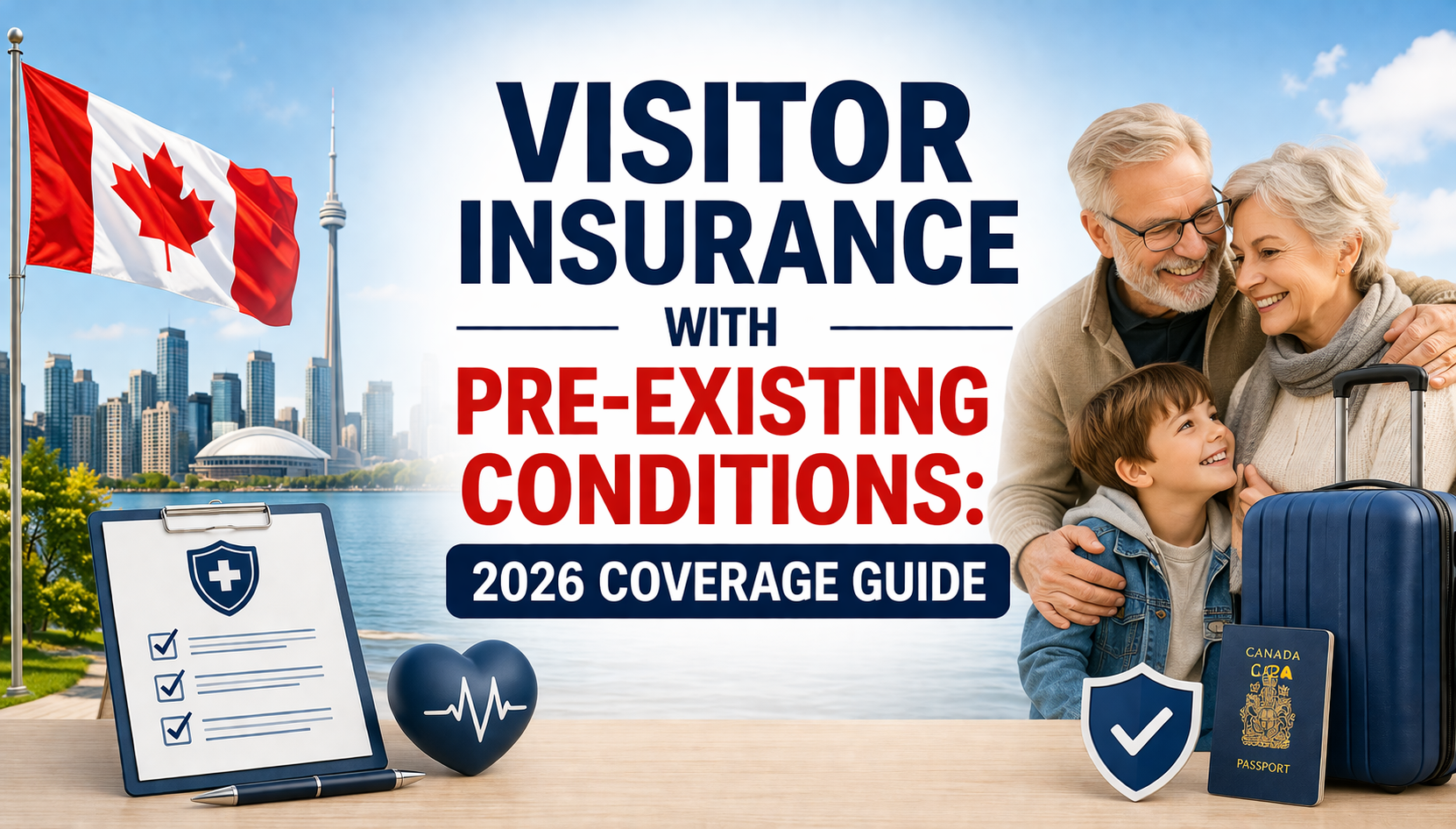
Visitor Insurance with Pre-Existing Conditions: 2026 Coverage Guide
Pre-existing conditions are the single most misunderstood part of visitor insurance in Canada – and the reason claims most often get denied. The good news is that almost every major Canadian insurer offers strong, fair coverage for stable pre-existing conditions in 2026. This guide explains in plain English what counts as a pre-existing condition, how stability rules work, which plans handle them best, and how to buy the right coverage online.
What Is a Pre-Existing Condition?
A pre-existing condition is any health issue your visitor has been diagnosed with, treated for, or taken medication for before the policy's effective date. Common examples include high blood pressure, diabetes, high cholesterol, asthma, thyroid issues, and arthritis. It does not have to be serious to qualify – if a doctor has prescribed medication or done a follow-up, the condition is considered pre-existing.
Why It Matters So Much
Standard insurance does not automatically cover pre-existing conditions. If your visitor has a heart attack and they have been taking blood pressure medication, the insurer will check whether the condition was stable for the required stability period. If it were not, the claim can be denied. Understanding this single rule prevents the biggest claim disasters in visitors to Canada insurance.
The Stability Period Explained
Every insurer requires a pre-existing condition to be stable for a defined period before the policy's effective date. Stability typically means:
No new diagnosis
No new medication or change in dose
No new symptoms or hospitalizations
No upcoming planned tests or surgeries
Stability periods range from 90 to 180 days, depending on the insurer and the visitor’s age. Younger visitors typically have shorter stability requirements; older visitors usually need 180 days of stability.
Plans That Handle Pre-Existing Conditions Well
Two Canadian insurers consistently stand out for their pre-existing condition coverage:
Manulife visitor insurance – widely respected for stable pre-existing condition coverage and clear policy wording
GMS visitor insurance – known for predictable claims handling and competitive pricing on pre-existing rider
For a complete view of all five major insurers, see our best visitor insurance plans comparison.
How Much More Does Pre-Existing Coverage Cost?
Adding pre-existing condition coverage typically increases the premium by 20 to 40 percent. For an older visitor with multiple conditions, the difference can be larger – but it is almost always worth it. A single denied claim can cost more than years of paid premiums combined.
What Pre-Existing Coverage Does NOT Include
Conditions that were unstable in the stability period before the policy effective date
Pre-planned treatments or surgeries
Treatment that the visitor traveled to Canada specifically to receive
Conditions not declared at the time of purchase
Routine management of the condition (regular check-ups, prescription refills)
The insurance is for emergencies caused by a flare-up of a stable condition – not ongoing maintenance.
How to Declare Pre-Existing Conditions Properly
Make a complete list of every condition the visitor has, including conditions managed only with medication
Note the date of last change – when medication, dose, or treatment last changed
Confirm stability – has there been any change in symptoms, medication, or testing in the past 90 to 180 days?
Buy a plan with explicit pre-existing coverage – do not rely on a basic plan
Keep medical records ready in case you need them for a claim
What to Do if a Claim Happens
For pre-existing condition claims, the documentation game matters more than usual. The smoother your paperwork, the smoother the payout. See our walkthrough of emergency medical insurance for visitors to Canada for the full claims process. Visit the DaddySafe claims page for direct guidance on filing a claim.
Common Mistakes
Hiding conditions to lower the premium – the #1 reason claims get denied
Assuming all plans cover pre-existing conditions automatically (most do not)
Forgetting to declare conditions managed only with medication
Ignoring the stability period and traveling right after a medication change
Picking the cheapest plan without checking pre-existing rules
Quick Buying Checklist
Confirm all pre-existing conditions are stable
Choose a plan with pre-existing condition coverage included or as a rider
Pick at least $100,000 emergency medical coverage
Compare top Canadian insurers in one place
Buy online and save the policy and assistance number
Conclusion
Visitor insurance with pre-existing condition coverage is essential for older parents and anyone managing an ongoing health condition. With clear stability rules, honest declarations, and the right plan, your visitors are fully protected throughout their stay. Get an instant visitor insurance quote with pre-existing coverage in 60 seconds and choose the plan that protects what matters most.
Related Blogs