Cheapest Months to Fly to Canada in 2026: Airfare Guide for Visiting Families
Airfare is the single biggest line item for most visitors flying to Canada. Get it right and you save $400 to $1,000 per ticket. Get it wrong and you are paying peak prices for a shoulder-season trip. Here is a 2026 airfare guide written specifically for visitors and Super Visa sponsors planning multi-generational family trips to Canada.
The Cheapest Months to Fly to Canada
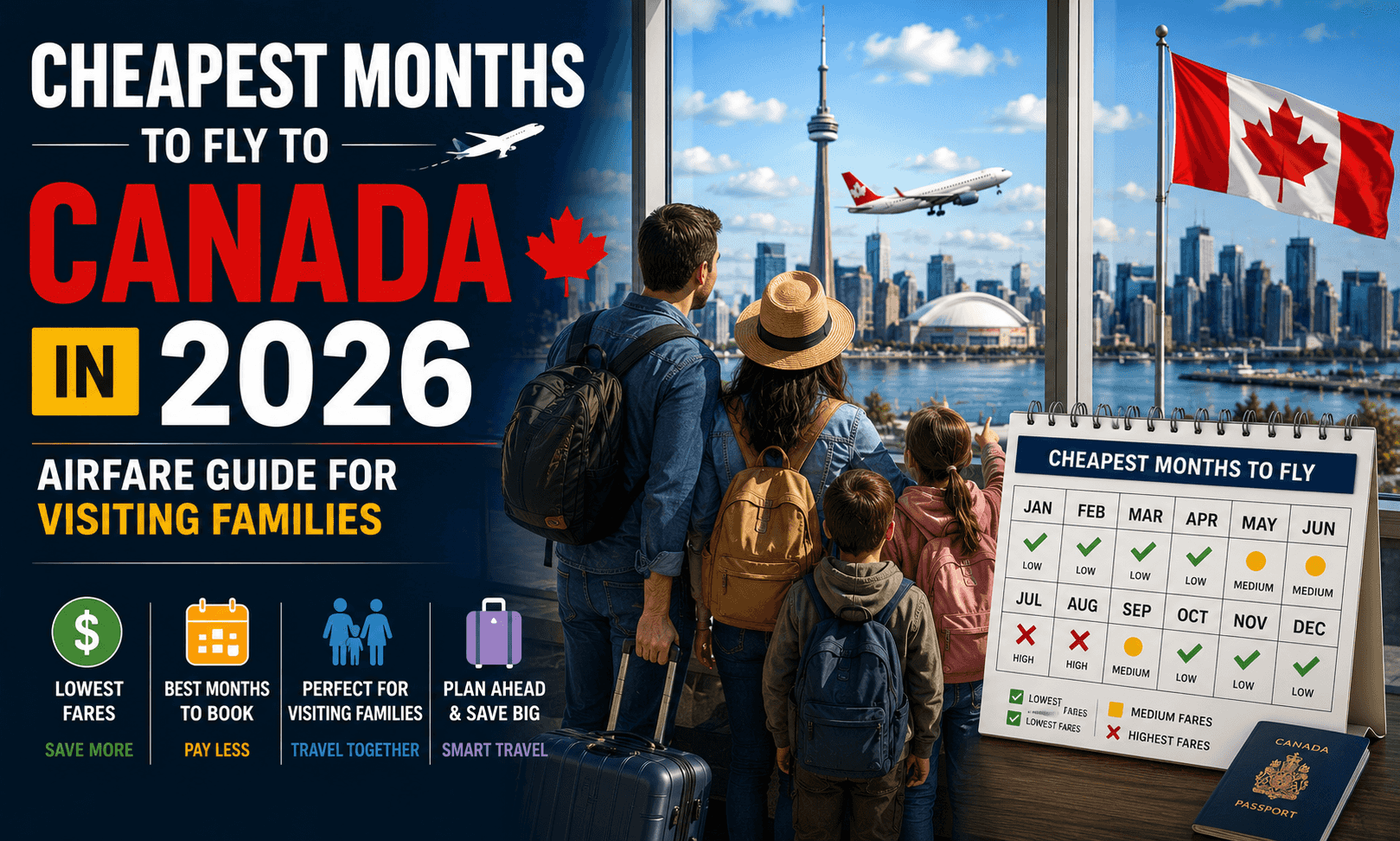
The single most useful rule: avoid July and December. The cheapest months to fly into Canada in 2026 are:
Late January to mid-March fewest tourists, lowest fares, but coldest weather.
Late April to mid-June warm enough for sightseeing, cheaper than summer.
Late September to early November fall colors, lower fares, comfortable temperatures.
Across most South Asian, Middle Eastern, and Latin American departure cities, these windows save 25 to 45 percent versus peak July and December prices.
How Far Ahead to Book
The sweet spot for international flights to Canada in 2026 is 90 to 150 days before departure. Booking earlier than 6 months rarely saves money airlines have not opened low-fare buckets that early. Booking inside 21 days almost always costs more.
One-Stop vs. Direct: The Real Math
Direct flights are convenient. One-stop flights are cheaper. The savings on a one-stop itinerary through Doha, Dubai, Istanbul, or Frankfurt are typically $300 to $700 versus a direct Air Canada or Air India long-haul. For senior parents on a Super Visa, the longer travel time is sometimes worth the cost difference, sometimes not weigh comfort against budget honestly.
Best Airlines for Visitors to Canada in 2026
For value and reliability on long-haul routes to Canada:
Qatar Airways consistently among the best one-stop options to Toronto, Montreal.
Emirates strong YYZ and YVR connections via Dubai.
Turkish Airlines often the cheapest one-stop from South Asia and Africa.
Air Canada best for direct flights; price-match Aeroplan award seats if you have points.
WestJet strong for domestic onward travel after international arrival.
Airport Choice Matters
If a visitor's final destination is Calgary, Edmonton, Winnipeg, or Ottawa, check if it is cheaper to fly into Toronto or Vancouver and connect domestically on WestJet or Porter. Sometimes the saving is $200+; sometimes the connection is not worth the hassle.
Tools That Actually Help
Google Flights for price calendars. Skyscanner for "Everywhere" searches. Hopper for price prediction alerts. Aeroplan and Air Canada deal alerts for sponsor-side flexibility. Set fare alerts the moment your visa application is filed by the time the visa is approved, you will already know whether the route is cheap or expensive.
Travel Insurance Is Not Optional When You Book Cheap
The cheapest fares are almost always non-refundable. Trip cancellation and medical insurance protect both the visitor's airfare and the family's peace of mind. Visitor medical insurance from a Canadian insurer is separate from trip-interruption coverage but both matter.
One Underrated Tip for Super Visa Families
Many Super Visa parents stay 6 months to 2 years at a time. Open-jaw tickets (fly into Toronto, fly home from Vancouver if their child relocates) can save money and stress. Most airlines allow free date changes on long-haul tickets booked in fare classes Y, B, M, or H —pay a little more upfront for flexibility on long stays.
Before You Travel: One Thing Most Visitors Forget
Whether you are flying in for two weeks or sponsoring parents on a Super Visa for two years, the single most overlooked piece of the Canada trip is medical insurance. A single emergency room visit in Canada can cost a visitor more than the entire flight. Public healthcare does not cover non-residents.
DaddySafe compares real-time visitor and Super Visa quotes from Manulife, GMS, 21st Century, Destination Canada, and RIMI in 60 seconds. No phone calls, no markup, no commission pressure.
Compare Visitors to Canada Insurance Now | Compare Super Visa Insurance
Premium ranges, costs, visa rules, and travel data are illustrative for 2026 and change frequently. Always check official Government of Canada sources and review actual policy wording before purchase. DaddySafe is owned and operated by Immunis Financial Brokers Inc., a licensed Canadian brokerage.
Related Blogs